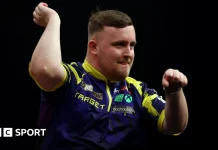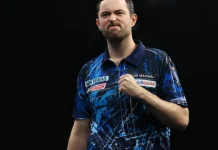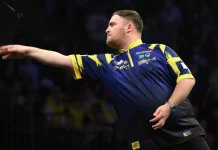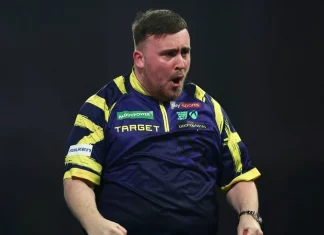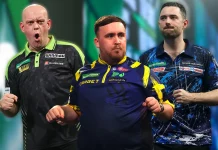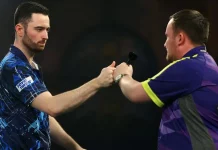
Jonny Clayton sealed the night in Scotland as Clayton wins Premier League night three Glasgow, triumphing over Gian van Veen with a decisive score of 6-2 at the OVO Hydro. This victory was not merely a stroke of luck; it involved defeating tough opponents, making his path to the top especially impressive.
In a formidable display of skill, Clayton first took down Gerwyn Price, followed by Luke Littler, before facing Van Veen in the final. His performance was highlighted by a stunning 156 checkout and an impressive 104.35 average during the decisive match. This victory marks a significant moment in the league race, showcasing Clayton’s determination and talent.
Key Takeaways
- Clayton bested Van Veen with a score of 6-2 in the final.
- His path to victory included wins over Price and Littler.
- Michael van Gerwen withdrew due to illness, impacting the competitive landscape of the tournament.
Premier League Darts Night 3 Glasgow results (every match, all rounds)
| Match | Result | Note |
|---|---|---|
| Quarter-final: Gian van Veen vs Stephen Bunting | van Veen 6-3 | Strong finishing late |
| Quarter-final: Luke Humphries vs Josh Rock | Humphries 6-2 | Fast start, held throw |
| Quarter-final: Luke Littler vs Michael van Gerwen | Littler BYE | MVG ill, withdrew |
| Quarter-final: Jonny Clayton vs Gerwyn Price | Clayton 6-3 | Clinical on doubles |
| Semi-final: Jonny Clayton vs Luke Littler | Clayton 6-1 | Littler never settled |
| Semi-final: Gian van Veen vs Luke Humphries | van Veen won (score not confirmed) | Comeback, match darts saved |
| Final: Jonny Clayton vs Gian van Veen | Clayton 6-2 | 156 finish, 104.35 avg |
The nightly format remains straightforward: it operates as a one-night mini tournament where the winner earns 5 points, the runner-up gets 3, and losing semi-finalists secure 2 points. Meanwhile, quarter-final losers walk away empty-handed.
For the official rolling scoreboard across the season, check the BBC Premier League darts results page.
Quarter-finals at the OVO Hydro: who advanced, and how the bracket shifted
Michael van Gerwen’s withdrawal created a seismic shift in the tournament bracket, allowing Luke Littler a direct passage into the semi-finals. Meanwhile, Clayton outperformed Price with a score of 6-3, showcasing better accuracy on crucial doubles. Van Veen powered through with a 6-3 victory over Stephen Bunting, while Luke Humphries advanced after defeating Josh Rock 6-2.
Semi-finals and final: Clayton pulls away, Van Veen cannot match the pace
In the semi-final, Clayton dominated Littler with a score of 6-1, displaying a mix of steadiness and skill. The match never really caught fire for Littler. On the opposite side of the bracket, Van Veen managed to edge past Humphries, despite trailing and facing match darts against him; however, the exact score of that matchup remains unconfirmed.
The final was clearly in Clayton’s favor, finishing 6-2 against Van Veen. His 156 checkout came at a crucial moment, shutting down any pressure that Van Veen might have hoped to build.
How Jonny Clayton won the night, the turning points that decided it
Clayton showcased his skills when the pressure mounted. He didn’t need to throw an abundant number of 180s; instead, he relied on steady doubles and smart decisions. His proficiency enabled him to capitalize on his opponents’ misses swiftly while taking measured approaches when necessary.
His decisive moments were amplified by a strong overall performance, encapsulated by the 104.35 average and *the headline making 156 checkout</strong*. This kind of finish can be pivotal, flipping the flow of a match suddenly. Clayton’s resilience in overcoming a range of challenges—pressure from Price, speed from Littler, and belief from Van Veen—demonstrates a versatility that is crucial in tournament play.
Premier League nights reward control more than reputation, because every match is short and every miss gets exposed.
The finish everyone will replay: the 156 checkout in the final
The 156 checkout exemplifies high-stakes darting artistry. Achieving such a high finish demonstrates not only technical skill but also the capacity to perform under pressure. In short matches, a strike like this can create a significant scoreboard gap, compelling the opponent to chase an ever-more daunting target.
Winning ugly is not the point, Clayton won with control on doubles
This match wasn’t just about someone barely hanging on. Clayton’s control enabled him to generate chances with smart setups, maintaining a consistently strategic approach that encourages success across multiple tournaments.
Big stories from Glasgow: Van Veen’s surge, Littler’s flat semi, and Van Gerwen’s illness withdrawal
The Glasgow leg of the Premier League was not only about Clayton’s win; it advanced several narratives. Van Veen’s impressive performance reinforced his presence in the competition, while Littler’s flat semi-final performance raises questions. Additionally, Van Gerwen’s absence looms large, creating ripples across the table.
Van Veen’s run to the final shows he belongs in this field
Gian van Veen kicked off his night with a 6-3 win against Stephen Bunting and displayed poise during his subsequent matches. His comeback against Humphries, where he saved match darts before pulling off a win, indicates a strong mental game, essential for future success.
What happened to Luke Littler on the night, and why the bye mattered
Littler managed to secure a bye into the semi-final due to van Gerwen’s withdrawal. However, his performance diminished in the semi-final, lacking a steady scoring rhythm and failing to convert doubles effectively, which ultimately led to his defeat against Clayton.
Why Michael van Gerwen withdrew, and the real impact on points and legs
Michael van Gerwen’s withdrawal due to illness left a significant hole in the tournament dynamics. This left his quarter-final match treated as a 0-6 loss for legs, granting Littler an unexpected bye into the semi-finals—a distinction that can dramatically shift momentum in such a tight league format.
Premier League Darts table after Night 3: standings and what they mean
| Position | Player | Nights won | Matches won | Points |
|---|---|---|---|---|
| 1 | Clayton | 1 | 5 | 9 |
| 2 | van Gerwen | 1 | 5 | 8 |
| 3 | van Veen | 0 | 4 | 6 |
| 4 | Price | 1 | 3 | 5 |
| 5 | Humphries | 0 | 2 | 4 |
| 6 | Littler | 0 | 1 | 4 |
| 7 | Bunting | 0 | 0 | 0 |
| 8 | Rock | 0 | 0 | 0 |
The standings reflect the high stakes of the Premier League Darts format, where the points system amplifies the impact of a single night’s performance. Claiming victory means accumulating 5 points, allowing players to ascend the ranks rapidly, while subpar performances carry serious consequences in a tight competition.
Quick points system explainer for new viewers
Each event unfolds as a knockout mini tournament, with points awarded based on how far players progress. The short matches intensify the competition, where an excellent run can dramatically change a player’s standings. Moreover, the leg difference becomes vital for tiebreaking scenarios as the season proceeds.
What’s next: Night 4 in Belfast and the storylines to watch
Looking forward, Night 4 will be staged at the SSE Arena, Belfast, on February 26. Clayton’s victory in Glasgow has set a standard for what is needed to excel: consistent doubles, key finishes, and decisive leg management.
- Will Clayton maintain his winning momentum following his Glasgow triumph?
- Can Van Veen convert his strong performance into a win?
- What impact will Van Gerwen’s return have on overall momentum and strategies?
The three matchups and moments fans will be looking for next week
Attention will be drawn to the players yet to score points, with increasing pressure as the tournament evolves. The focus will remain on early scoring because quick starts can lead to significant tactical advantages, potentially forcing others to play catch-up right from the outset.
FAQs fans are searching right now
Who did Clayton beat to win Night 3 in Glasgow?
Clayton’s path to victory included wins over Gerwyn Price in the quarter-final, Luke Littler in the semi-final, and Gian van Veen in the final. The final score against Van Veen was 6-2.
What was Clayton’s checkout or high finish?
His crowning moment in the final was a stunning 156 checkout that dramatically shifted the momentum of the match.
What was Clayton’s average in the final?
Clayton recorded an exceptional 104.35 average in the final, embodying a consistent performance throughout the match.
Why did Van Gerwen withdraw?
Michael van Gerwen withdrew due to illness. The specifics were not detailed in the reports.
How does Premier League Darts scoring work?
Each night is structured as a knockout tournament. Points are awarded based on performance: the winner earns 5 points, the runner-up receives 3, semi-finalists get 2 each, and quarter-final losers receive nothing.
Who leads the Premier League table after Night 3?
Clayton stands at the top of the leaderboard after Night 3 with 9 points, followed closely by Van Gerwen with 8 points and Van Veen holding 6.
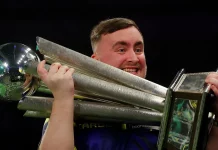
Jonny Clayton walked away from Glasgow with the trophy, a 6-2 win in the final, an impressive 156 checkout, and a solid 104.35 average that made all the difference in crucial moments. The league table is beginning to tighten, with a mix of withdrawals and standout performances impacting standings. As we approach Night 4 in Belfast, the pressure builds, ensuring that the race remains as thrilling as ever.
Verified results are compiled from broadcaster reporting and PDC match updates.
Update policy: This article will be updated should the PDC revise stats such as averages or checkouts.